
A Gentle Estate Cleanout Checklist for Shreveport Families
Clearing out a loved one’s home is rarely simple. This checklist walks Shreveport families through sorting, timelines, and disposal at a pace that respects what the house holds.
Shreveport dumpster guide
Keeping an active job site moving means the right container size, a swap-out plan, and knowing what still can’t go in the box even on a construction site.
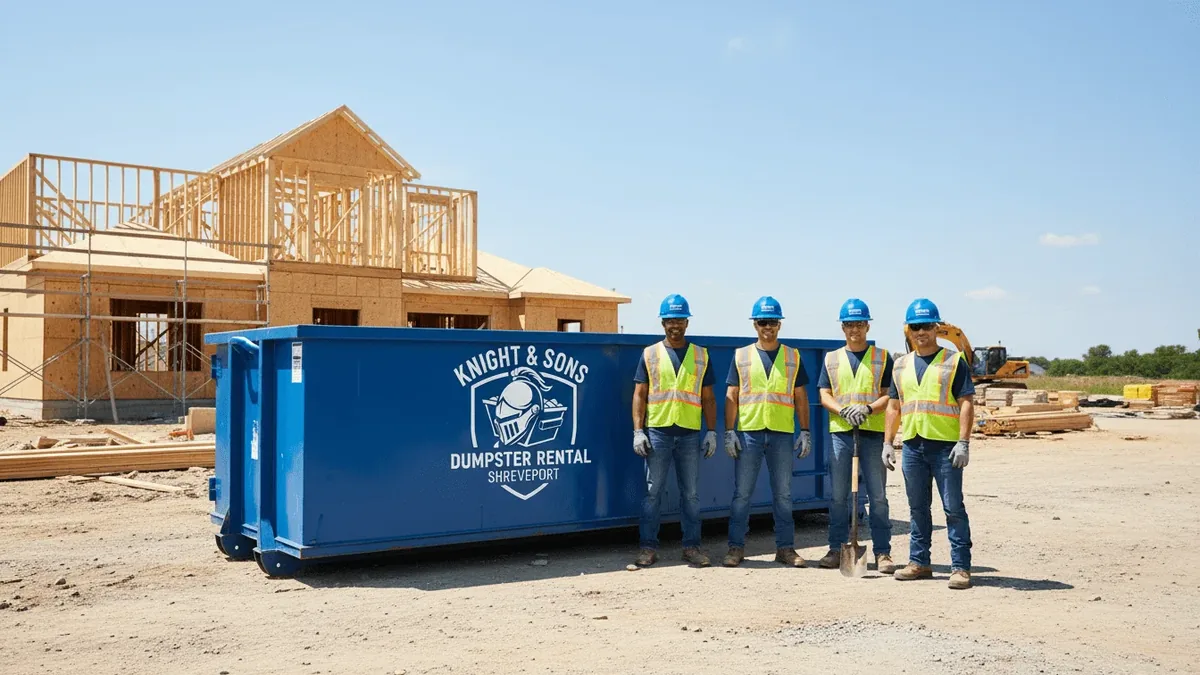
Construction debris is a different animal from a household cleanout, and it needs to be planned differently. A homeowner clearing a garage can wait a week for pickup without it costing anyone money. A GC with three trades on site loses real dollars every hour a full dumpster sits there blocking the next task. At Knight & Sons Dumpster Rental Shreveport, most of our commercial and contractor relationships come down to getting this part right — the right container, sized and scheduled around the actual pace of the job.
C&D debris covers most of what comes off an active build, remodel, or teardown:
That last one comes with a real caveat: concrete and masonry are dense enough that a large quantity often needs its own dedicated container sized for weight rather than mixed in with lighter framing and drywall debris. Loading a 20-yard box with drywall and lumber up top and concrete at the bottom sounds efficient, but it’s the fastest way to hit a tonnage limit while the box still looks half full. If your job has a significant concrete or masonry component — a foundation demo, a driveway tear-out — flag it when you book so we can size it correctly. Our full breakdown of allowed materials is in what can go in a dumpster in Louisiana.
Most active construction work in the Shreveport and Bossier City area runs on the larger end of our lineup. For ongoing jobs, we typically point contractors toward:
The smaller 10 and 15 yard containers have their place on a job site — a quick bathroom remodel or a small punch-list cleanup — but for anything with multiple trades running over multiple weeks, undersizing usually just means more swap-outs than the schedule needs. See our full sizing guide for the complete rundown of all five sizes, or go straight to our construction dumpster rental page.
A full dumpster on an active site isn’t just an inconvenience — it’s a bottleneck. If the framers can’t clear scrap because the box is full, the next trade can’t move in behind them. A few things keep this from happening:
On multi-trade jobs, debris ownership tends to blur — framers, roofers, and finish crews are all generating waste into the same box, on different schedules. We work directly with general contractors on these jobs to set up a rental cadence that matches the build schedule rather than a one-size rental period, and we’re glad to coordinate with a site super or PM directly if that’s easier than routing everything through one point of contact. If you manage several active sites at once, our commercial services can be set up around a standing relationship rather than booking each job separately.
Being a job site doesn’t change what’s legally allowed in a roll-off. The same restrictions apply here as anywhere else, and a few come up more often on construction and demo jobs specifically:
Renovation and demolition work on older buildings in particular can turn up asbestos-containing materials that aren’t obvious until a wall or ceiling is opened up. If that happens, stop and get it assessed rather than tossing it in the box — it’s a straightforward regulatory issue, not a judgment call. The Louisiana Department of Environmental Quality (LDEQ) oversees solid-waste and hazardous-material rules statewide, and asbestos handling in particular falls under a separate, certified process.
The jobs that run smoothest are the ones where we know the scope before delivery day — size, expected debris type, rough timeline, and site access. Call us early in your planning process rather than the morning you need the box on site. Reach us at (318) 616-9108, see our full services, check available sizes, or get a quote through our contact page. For cost expectations on a larger project, our pricing guide explains what drives the number up or down.
FAQs
Most active jobs in Shreveport and Bossier City do best with a 20, 30, or 40 yard container, depending on job scope and debris pace. A 20 yard covers moderate remodels well; 30 and 40 yard sizes suit whole-house builds and major demolition.
You can for small amounts, but a large volume of concrete or masonry is dense enough to hit weight limits fast. For a significant concrete or masonry component, a dedicated container sized for weight is usually the better approach — ask us when you book.
We work with you to schedule pickups and drop-offs around your project timeline rather than a fixed one-time rental. Give us your rough debris pace and schedule up front so we can plan swap-outs before the box actually fills, not after.
No. Asbestos requires certified abatement and disposal regardless of the job type. If it turns up during a renovation or demo, stop and have it assessed rather than including it in the container.
Yes. We regularly set up rental schedules around a build’s pace for GCs and subs managing active sites, and we can coordinate with a site super or PM directly rather than requiring a single point of contact for every swap-out.
Ready when you are
Call and you will speak to someone local who knows the streets, the permit rules and which box actually fits your driveway. Flat rate quoted up front.
Keep reading
Clearing out a loved one’s home is rarely simple. This checklist walks Shreveport families through sorting, timelines, and disposal at a pace that respects what the house holds.
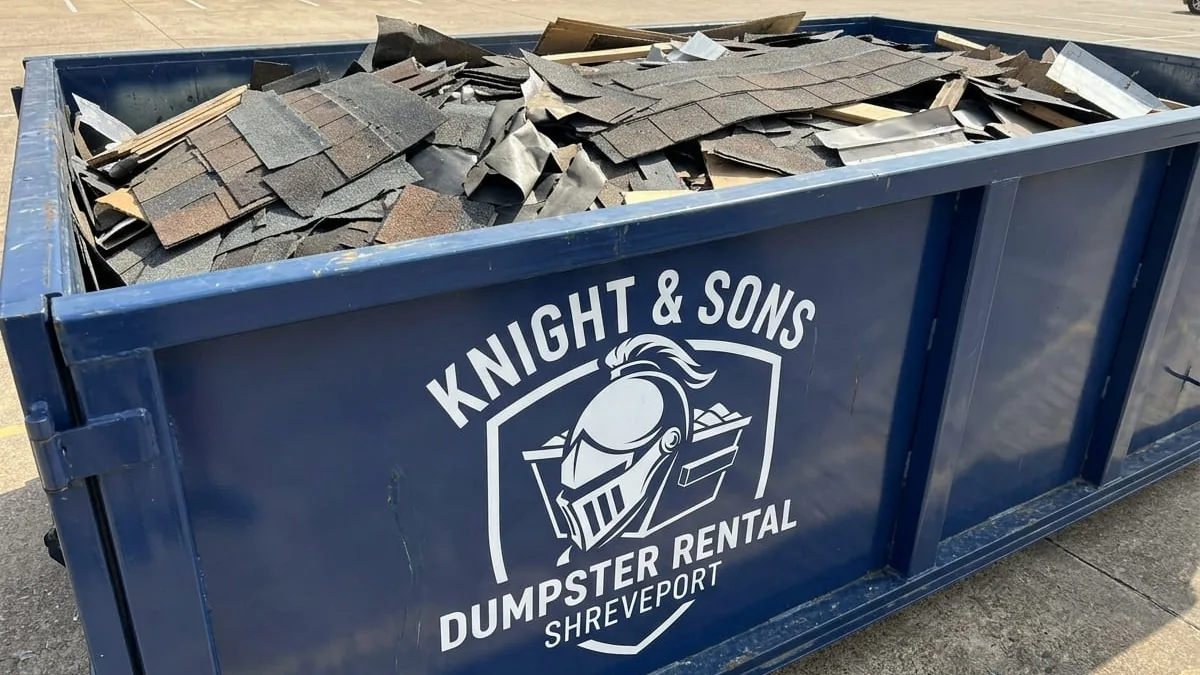
Shingles are heavy, not just bulky — here’s how Shreveport homeowners and roofers should size and place a dumpster for a tear-off job.

From spring thunderstorms to occasional Gulf hurricane remnants, here’s how Shreveport homeowners can handle storm debris cleanup efficiently and safely.