
Roofing Tear-Off Dumpster Guide for Shreveport Homeowners
Shingles are heavy, not just bulky — here’s how Shreveport homeowners and roofers should size and place a dumpster for a tear-off job.
Shreveport dumpster guide
Clearing out a loved one’s home is rarely simple. This checklist walks Shreveport families through sorting, timelines, and disposal at a pace that respects what the house holds.
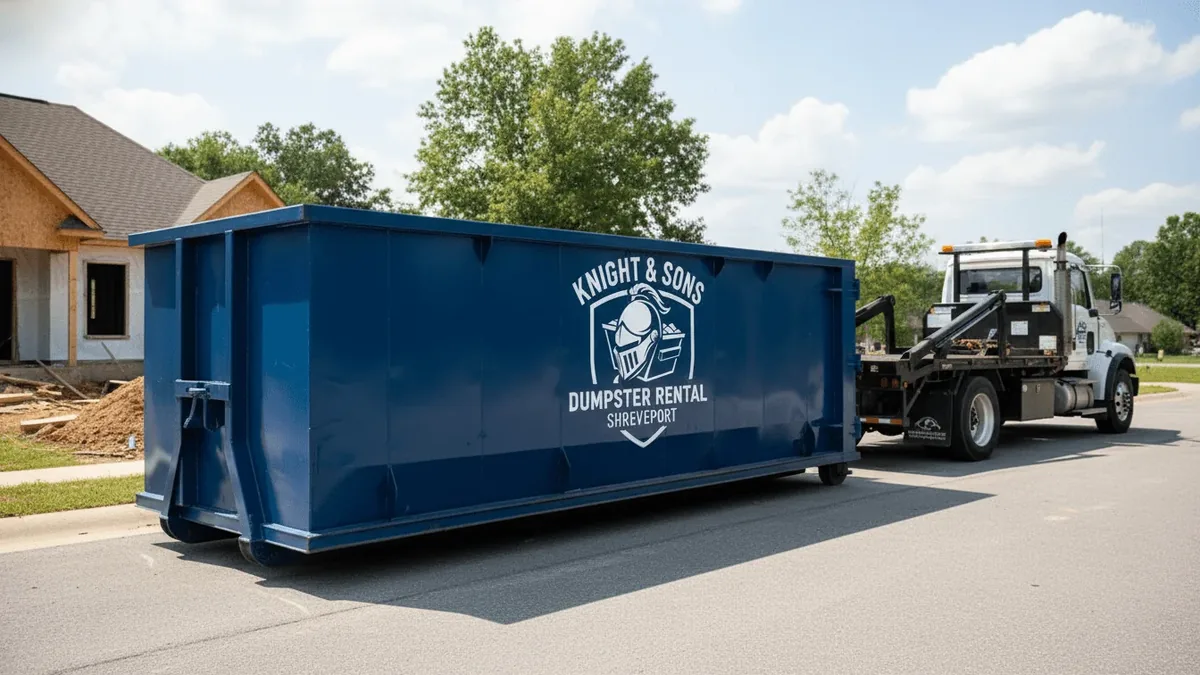
If you’re reading this, chances are you’re facing one of the harder logistical tasks a family takes on — clearing out a parent’s house after a passing, helping a loved one downsize into assisted living, or working through a probate estate with siblings scattered across the country. There’s no way to make that emotionally easy, but we can make the practical side simpler. This checklist is built from what we see over and over again on estate cleanouts across Shreveport, Bossier City, and the surrounding parishes — and it’s written to be worked through at whatever pace you need.
Before a single box gets packed, it helps to know who else has a stake in the house. If the estate is in probate, the executor typically has final say on what stays, what’s sold, and what’s donated or discarded. If siblings or other family members want a say in specific items, it’s worth doing a walk-through together first — even a phone call with photos — so nobody feels like decisions were made without them. If a realtor or estate-sale company is involved, loop them in early too, since they’ll often want first pick of anything sellable before the rest goes to donation or disposal.
Trying to make a final decision on every single item as you touch it is exhausting and slows everything down. Instead, most families do better with a simple four-way sort, working room by room:
That last category is what typically fills the dumpster. It’s okay — even expected — for it to be a large pile. A house lived in for decades accumulates a lot, and there’s no shame in a straightforward disposal run once the keepsakes and sellable items are out.
Estate cleanouts vary a lot depending on the size of the house and how long someone lived there. As a general guide, a smaller home or a partial cleanout (just a garage or a couple of rooms) often fits in a 15-yard container, while a full three- or four-bedroom house cleanout more often calls for a 20 or 30-yard. If you’re not sure, our team is happy to talk through the home’s size and condition on the phone and recommend a size — you can also browse specs on our dumpster sizes page or read our general guide on what size dumpster you need before you call.
Estate work rarely moves on a fixed schedule. Court dates shift, out-of-town family can only fly in on certain weekends, and sometimes a house just isn’t ready to be tackled until grief has had a little room to breathe. Our standard rental period runs 3–7 days, which is usually enough for a full sort-and-clear weekend, but if your timeline is uncertain, tell us that when you call — we’d rather set expectations honestly up front than rush a family through something this personal.
A little bit of prep goes a long way toward a smooth cleanout:
If the home is being prepped for sale, timing the dumpster after the estate sale (rather than before) usually makes sense, since sale companies often want to see everything in place before pricing items. Once the sale wraps and the leftovers are donated or claimed, that’s typically when the bulk of the disposal happens — getting the house down to bare rooms so a realtor can stage it or list it as-is. We work with families and estate professionals on this timing regularly, so don’t hesitate to have your realtor or estate-sale coordinator call us directly if that’s easier.
In our experience, the bulk of an estate cleanout dumpster is unremarkable but heavy: old carpet, damaged furniture, mattresses, broken shelving, water-stained boxes from the attic or garage, and general household debris that simply outlived its usefulness. It’s rarely glamorous, but clearing it is what lets the meaningful items get the attention they deserve. If you’re also handling a larger renovation to get the home ready for sale, our estate cleanout service page and full services list cover related situations we help with.
There’s no need to have everything figured out before you call us. Tell us roughly what you’re dealing with — the size of the home, what’s already been sorted, and your rough timeline — and we’ll help you land on the right size and schedule a delivery that works for your family. Reach our team at (318) 616-9108 or through our contact page, Monday through Saturday, 7:00 AM to 7:00 PM. We serve Shreveport, Bossier City, Blanchard, Keithville, Benton, Haughton, and the surrounding communities across Caddo, Bossier, and Webster parishes, and we’re glad to talk it through at whatever pace feels right.
FAQs
Our standard rental period is 3–7 days, which covers most cleanout weekends. If your timeline is uncertain because of probate scheduling or family availability, tell us when you call — we can talk through options rather than lock you into a date that doesn’t work.
It depends on the home’s size and how much is left after sorting. A partial cleanout or smaller home often fits a 15-yard container, while a full three- or four-bedroom house more often needs a 20 or 30-yard. Call us and we’ll help you size it based on your specific situation.
Yes, worn-out or damaged furniture and mattresses are common in estate cleanouts and are fine for the dumpster. Just keep in mind that heavier furniture counts toward the tonnage allowance included with your rental.
Household chemicals, old paint, motor oil, propane tanks, batteries, and similar hazardous items can’t go in the container. Set those aside and we can point you toward the right local disposal option.
Yes, we coordinate with estate-sale companies and realtors regularly on timing and placement, especially when a home is being prepped for sale. Feel free to have them call us directly at (318) 616-9108.
Ready when you are
Call and you will speak to someone local who knows the streets, the permit rules and which box actually fits your driveway. Flat rate quoted up front.
Keep reading
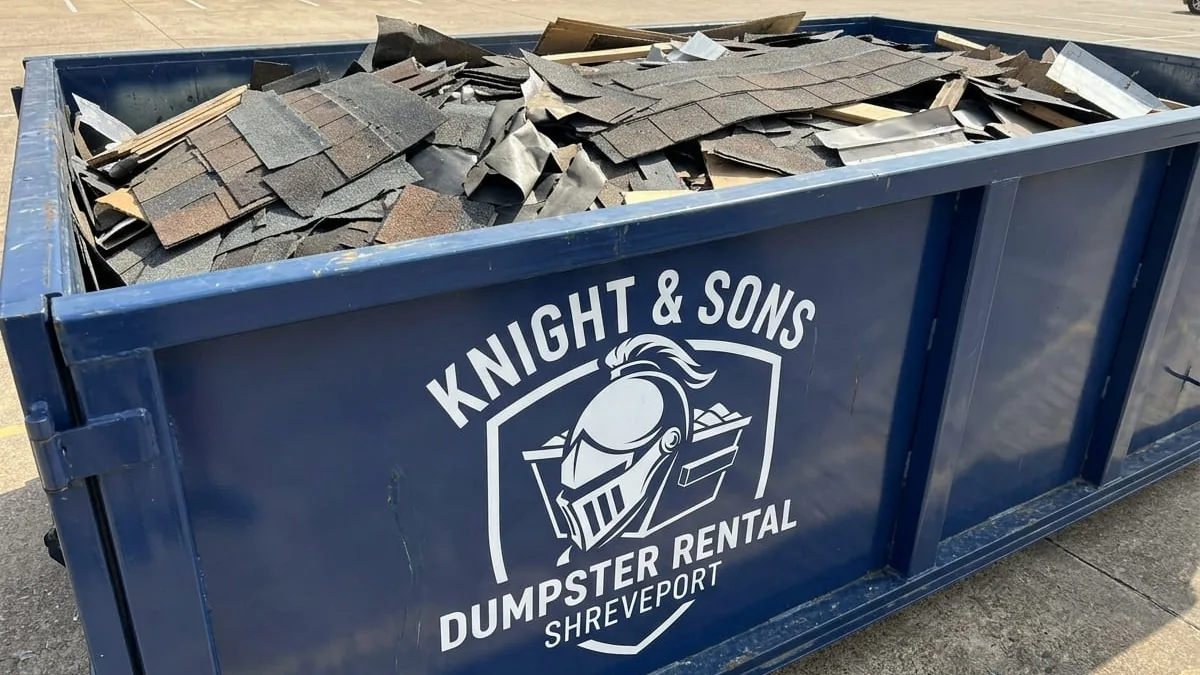
Shingles are heavy, not just bulky — here’s how Shreveport homeowners and roofers should size and place a dumpster for a tear-off job.

From spring thunderstorms to occasional Gulf hurricane remnants, here’s how Shreveport homeowners can handle storm debris cleanup efficiently and safely.
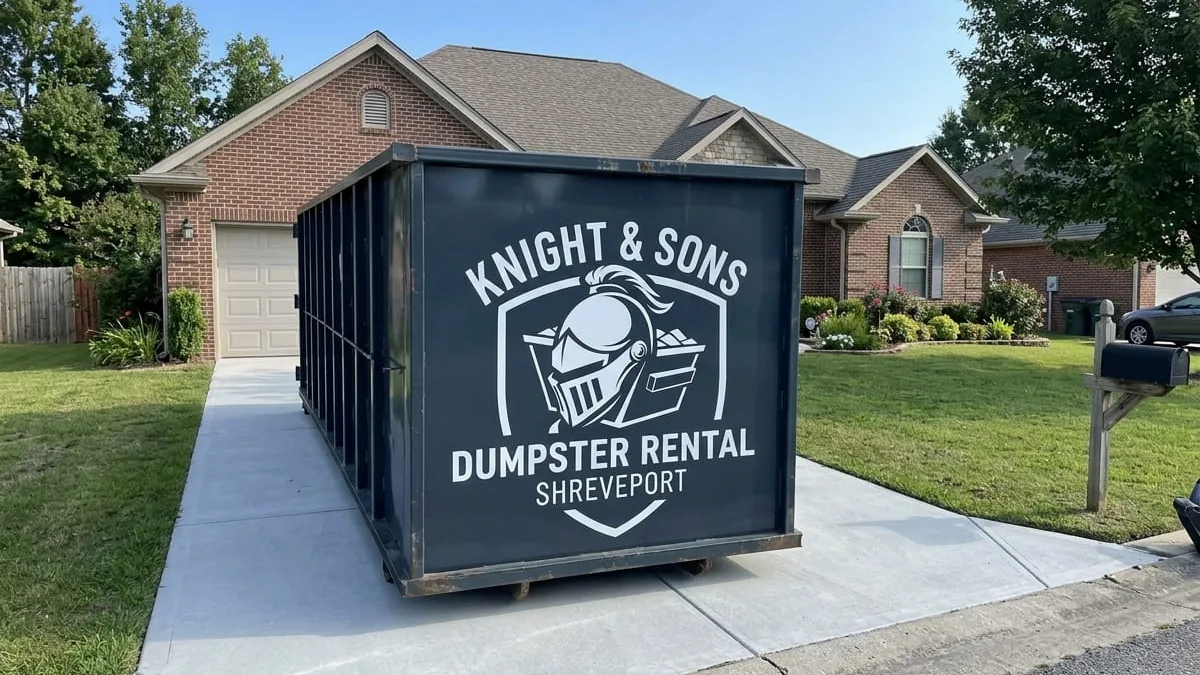
Caddo Parish’s famous red clay is part of the landscape here — here’s what it actually means for placing a dumpster on your property.